It’s Not All Misery: What Mary Oliver Taught Us About Joy

The passing of Mary Oliver, and the subsequent news articles and social media messages about her, made me realize something about contemporary poetry. There’s so little joy in much of it.

The range of emotions and experience available for poets is limitless, yet the predominant themes in journals and books makes it seem like poets choose to spend more of their energy on the darker side of the spectrum. Now there’s a lot to be depressed about today and a lot to be upset about. Clearly social and political issues influence, and sometimes dominate many poets’ work. And there’s nothing inherently wrong with that. Good writing, whether it concerns tragedy, anger, sorrow or grief, is still good writing. And as I said in a previous post, pain lends a poem a kind of emotional energy that’s useful for a poem. In fact, I think negative emotions are easier to drive than positive ones. But that doesn’t mean that every poem has to feel like a gut punch.

Mary Oliver could write grief, sorrow and tragedy as well, very well in fact. But she was also known as a poet of joy–one who actively sought out wonder and beauty on her daily walks. Nature is pretty even at being able to deliver metaphors for struggle and metaphors for success, yet more often, Oliver, maybe an optimist, chose to see the positive. She wanted to be impressed. And that’s kind of the point–both a poetry lesson and a life lesson. Consider the attitude expressed in these lines from her poem “First Snow”

and though the questions

that have assailed us all day

remain–not a single

answer has been found–

walking out now

into the silence and the light

under the trees,

and through the fields,

feels like one.

In my own poems I want to be open to the light more than the dark, and some days that’s harder than others, but seems worth the effort.

Notes on Poetry Energy

It’s January first, so a lot of people don’t have much energy right now, but poetry energy isn’t about getting up early after a night out, it’s about engagement and control—in your poems and over your reader. One of the elements that makes the best poems the best is their use and control of energy. I’ll try explaining what I mean and how it works below.

  1. Energy, tension and suspense can often be used interchangeably is this discussion, and I will use them that way because I’m kind of lazy. Energy is the push and pull you feel as a reader when you’re progressing through a poem. It’s the pull the poem exerts on you to keep reading, and the push it enacts on your response. Energy makes you want to finish the poem. It’s transferred from the page into the reader and changes your temperature—it’s the gasp or sigh or “oh wow” you exhale at the end.
  2. The strongest energy in poetry is emotion. All emotions are energy—some stronger than others. Some are more efficient (work better, faster, longer) than others. Most successful poems work by managing their emotional energy.
  3. The easiest way to add emotional energy to a poem is to put a person in it. Poems without any people (dogs count as people, but cats don’t) are at an energy disadvantage. Readers seek things in a poem to identify with, to connect to. Without a person as a subject in the poem the reader scrounges around for something to clutch onto. Often the person is the author/speaker—that’s fine. That doesn’t mean that an unpeopled lyric can’t be successful—its just means that it needs to find another way to rev up its energy.
  4. Great poems are often downers. That’s not because all poets are depressed. It’s because negative energy emotions are easier to do than positive energy emotions. It’s easier to trigger someone’s emotions with negative things because that connects with our senses of alarm, sympathy, fear and loathing, than with positive things—unless you’re talking about cute dog videos. Joy is harder to do (in poetry and in life), which is probably why there’s less of it, and is one reason I was so thrilled to stumble upon this anthology by James Crews. My own theory on why negative emotions are more common in poetry is that they’re heavier and drive us to action (to write about them, correct them, drown them with wine…), while positive emotions drive us to revel in the moment rather than reflect on how we got there.
  5. So, to continue from point #4, if you want to add emotional energy, put a person in the poem. If you want to increase the emotional energy then drive home the negative (make the person suffer—poems with people happily sitting around at dinner have more trouble raising emotional energy than poems about someone hit by a milk truck). This doesn’t make you a bad person. It just shows you’re sensitive to the suffering of others and want to explore this aspect of humanity. But don’t ignore joy, celebration, and gratitude as well–when done skillful, those poems also are wonderful, like this one by Barbara Crooker.
  6. Energy can be increased with rhetorical techniques as well. Anaphora (repetition) is a great way to increase energy because the repetition of a word or phrase triggers our need for recognition and confirmation. Questions increase energy because they trigger the reader’s need for answers. Turns (such as the volta in sonnets) are great ways to manipulate energy because by shifting direction, they add tension, surprise, introspection, and maybe, resolution.
  7. Line breaks and enjambment can help manipulate the energy in a poem by affecting the pace of the image. Like the use of short lines or long lines, breaks are way to add and build tension.
  8. Like a spring or a bow and arrow, energy in a poem can be built up and released.
  9. All poems are triangles. They either start narrow (at the point) and expand as they progress, or they start wide and compress or shed excess to a fine point at the end.
  10. A simile is a micro example of the energy process. The first part of the simile (the description of the original thing, also called the tenor) is the pulling back of the bow to build energy, then the new thing it’s being compared to (the vehicle) is release. That’s why similes feel so good—they’re these little micro energy moments in a poem.
  11. I might be wrong about all this. Do your own thing.

Note: this post was slightly updated 6/28/22

How to Organize or Arrange A Poetry Book, GPS Style

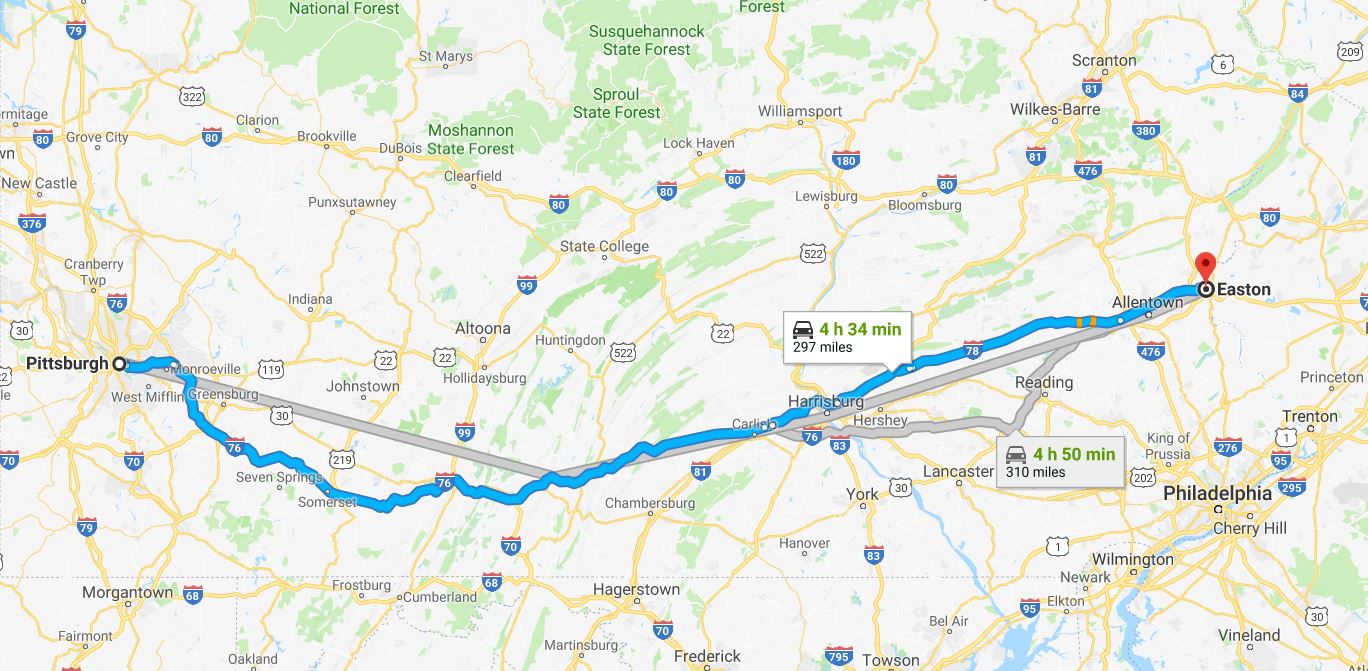
easton to pittsburgh

A friend who’s starting to put together a poetry collection asked me recently if I had any tips for how to organize a book. I suggested the standard practice of thinking about the book as having a story or arc, and organizing it around that. And while I still think that’s pretty decent advice, it’s also pretty vague. I also told her I personally like to end on a note of hope and look for the poem that will leave the reader with that feeling, and that’s when I realized what I actually was doing with my own organization strategy—I was creating a map toward hope.

So with that in mind, here are a few things I do or think about when organizing a collection of poems. I’m not much of an authority at this. I’ve only published five books, and I’m not a press editor, but here are principles that help guide me.

Focus on the destination

Think of the book as a trip. On a trip, unless you’re just aimlessly wandering, you usually pick the destination before you start driving. You punch the addresses into your phone, view the route, and then hit the road. Every so often you get a reminder to turn left at the next intersection or exit the highway via the off ramp. None of the individual steps along the route could happen if you hadn’t picked the destination first. When organizing a book, I’ll look for the final poem first (or at least early in the process). That poem is the destination. It’s where I want the reader to arrive at the end of the journey. As I stated earlier, I usually want to end on something hopeful, to leave the reader knowing that whatever happened earlier in the book, that all is not lost. If you want the reader to end on X feeling, you need to know what steps, turns or transformations will need to occur to bring them there.

Detours matter

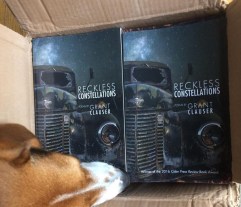
Most poetry books today (including mine) are broken into smaller sections. Sometimes these sections are thematically linked to tell a particular story (the first parts of both The Trouble with Rivers and Reckless Constellations focus on specific people and narratives). Think of those sections as necessary detours on your trip—but they still need to function as steps toward your goal. If you’re driving across Pennsylvania, you may make detours to visit the Anthracite Museum or Gettysburg, but how will those stops contribute to the overall experience of the trip? How will they help bring you to the end of the book? Do they support a transformation that happens in the book? Do they expand or contribute to themes you’re working toward?

Plan for rest stops

You can’t get through a long trip without stopping to pee now and then. You’ll need breaks, deviations, places to stretch your back, get some coffee. This can be true with poetry collections as well. Too much of one thing gets tiring, even if those things are very good. A friend called one of my poems a “park bench poem,” a sort of poem that allows the reader to take a breath, release the tension. Rests are part of the trip and necessary to reach the goal. Without a break now and then a book, especially one with emotionally intense poems, can be a bit overwhelming. Use rest stops sparingly, and make them useful to the whole, but use them.

Turn by turn directions

No journey (well, few at least) is a straight line. Every turn is a moment for consideration. Every turn is a choice. Your individual poems are also choices, and those choices have consequence in how the book unfolds. The order of your poems, like turns on a trip, can either get you closer to your destination or lead you away from it. You can also end up going around in circles without advancing further toward the goal. I write a lot of fishing poems, but I’ve never grouped them all together just because they’re all about fishing. That would be like getting stuck in one of those terrible New Jersey loop intersections. Instead, I’ll think of what each of the fishing poems is doing, what experience it’s leading the reader in and how it helps us get to the destination.

Going home

Sometimes, as in life and Lifetime movies, a book’s destination is the same place you started. But in order to realize that, the book has go through the motions of leaving home, process the experiences of being away, and eventually find its way back. The journey itself must still be important, otherwise you wouldn’t have written the poems. It may be a round trip, but it’s still a trip.

Of course there are other ways to organize a poetry book, or, as Hayden Carruth did in Scrambled Eggs and Whiskey, don’t organize them at all. These are just ideas that help me. You can do your own thing.

Revising is sometimes knowing when to stop writing

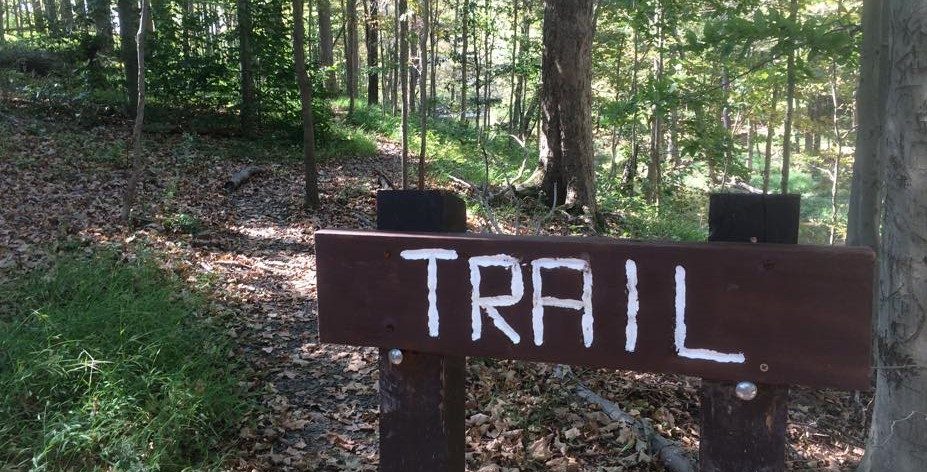
trail sign2

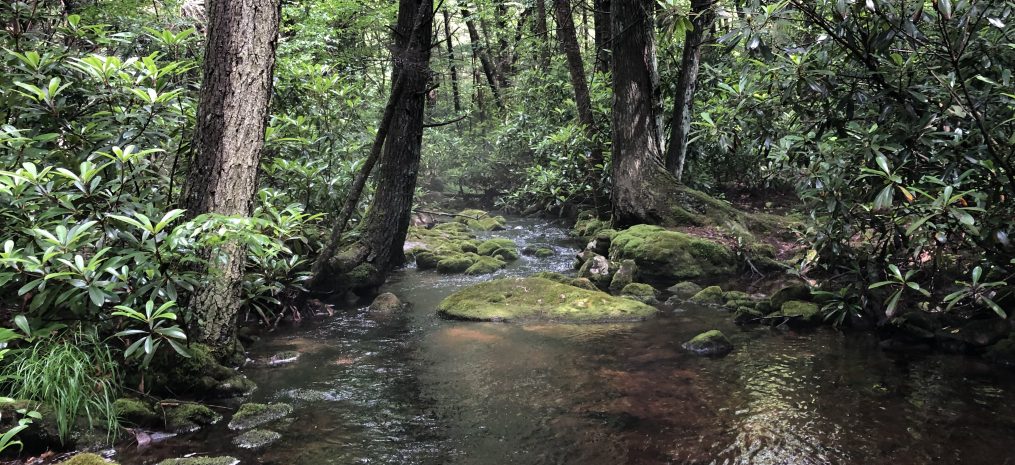
About a month ago, maybe more, I was hiking some woods I didn’t know very well. I’d been there only once before and hadn’t gone far along the trail, so this day was for exploring further. These certainly were some gorgeous woods–huge boulders tinted with moss and lichen, mixed oak and hickory trees that left a thick cereal of leaves, twigs and nuts on the ground, and a light covering of snow that shifts normal perspectives.

So Emmett, my dog, and I tramped down into the hollow toward a creek, back up along a rocky ridge, cut into a wider path that led to a logger’s opening, then back into the protected part of the woods where the trail zigzagged and upped and downed, until after a few hours, my feet were getting pretty sore, the sun was no longer warming my back, and even Emmett looked ready to curl up in the back seat of the car. But we were probably 40 minutes from the pulloff where it was parked.

By now the much of the fascination with these new woods had faded, and was instead replaced with thoughts of my aching insoles and frequent glances at the trail map to decipher the shortest route out of there. Emmett had stopped peeing on every rock, so I knew he was thinking the same thing.

That feeling of having gone too far is also familiar to me in my writing, and usually it’s a moment that comes up during the initial draft of a poem, or shortly after when I’m building on an initial jumble of words. That first impulse to write a poem can often be sort of directionless. But that’s also what makes it exciting. One of the biggest thrills I get from writing is the discovery that happens on the way through a first draft, and that’s very similar to the feeling I get when I first set off on a hike along a trail or a kayak trip down a creek. The difference is that with a hike, once your realize you’ve gone too far, you generally know where you need to return to (and hopefully you know how to get there.). With poem, it’s harder to know just when things took a wrong turn.

This came to me this morning, when I was reading Raymond Carver’s poem, conveniently tilted This Morning. In the poem he’s going for a walk and eventually reaches a point where he starts to take in the world and reflect… ie, gets poetic about it. It’s a good moment, and he carries it off for a few lines until the perfect moment of insight ends with the line “I know I did.” I would love if the poem just ended there with that sudden self awareness. 

Unfortunately, as good a poet as Carver was, he was also known to not be great at self editing (thank you Gordon Lish). The poems goes on for four more lines, which really just drags out and diminishes the wonderful moment that happened with “I know I did.”

So how do you know? Ah, well, that’s the hard part. Sometimes it’s just recognizing that you’ve made your point, hit your mark and now you’re just saying it again with different words or new images.

Writing beyond the ending is something I see pretty frequently in poems, usually by younger poets who can’t resist the impulse to just keep walking on down that trail. It’s also something I’m prone to myself, a lot. After I’ve put my first efforts on the page I go back and carefully feel out whether the poem went too far. Usually this requires some time or distance. I need to put it down for a few days, or read someone else in between, so I’m not hung up on my own endorphin rush from writing. Walking is different. You know when you’ve gone too far, but sometimes by the time you know there are already blisters on your feet and you just have to suffer through them until you get home.

Is Truth in Poetry Important?

poet_sake (2)

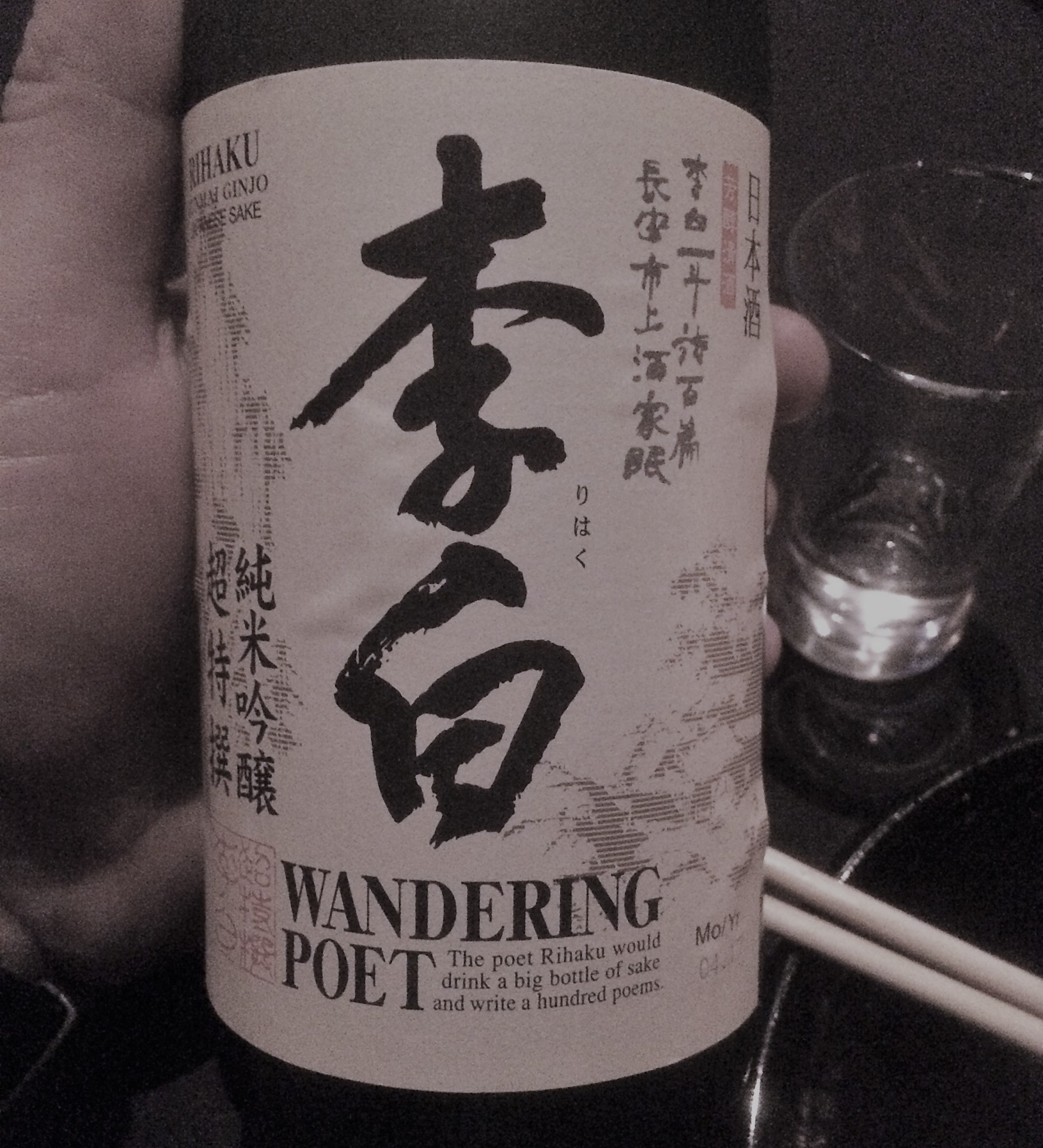
A very good bottle of sake I recently enjoyed with some friends. It has nothing to do with this post.

About a week ago the website Change Seven published an interview with me, conducted by writer Curtis Smith. The interview mostly focused on my book of poems, The Magician’s Handbook, that was released by PS Book in October. One question, however, asked about my writing process, and one part of my answer concerns a topic that’s important to me, so I’m going to elaborate here.

I stated in the interview that I often make up or exaggerate situations or events in my poems. I don’t think that’s a revolutionary concept, but sometimes it still leads to raised questions and sometimes raised eyebrows.

Truth, in poetry, is a complicated issue. I cringe when I hear poets talk about how they’re writing the truth or getting at the truth or whatever truthiness idea they go on about. Maybe that’s because I equate truth with facts, and in world where anything a person doesn’t agree with is branded as fake news, truth can be difficult.

Rather than aiming for truth in my poems, I aim for real or authentic (again, a vague and unhelpful word, sorry). Do the situations in the poem feel real, does it move or affect the way real feels move or affect. There’s a sort of truth, I suppose, in all my poems, and many of them do include autobiographical references, but rarely are they completely loyal to the events or people referenced. Because a poem is written in the first person doesn’t mean that it’s naturally about my experience or that the experience happened the way it’s depicted in the poem. It’s always bothered me that a short story is assumed to be fiction (in part because that’s how we’ve come to compartmentalize the genres) while poems are not. The fact that “creative non-fiction” is its own genre kind of baffles me.

Rather than sticking to the facts, my loyalty in writing is to the language—the way it sounds, the response it makes in my gut, the pictures it draws in the head and the places it steers me.

I raise this point because I think it’s important that poets feel free to create, not report. I’ve had students resist following the language out of fear of not properly reporting the facts.

I’ve had people ask me, usually after readings, about specific things in poems, and sometimes they’re disappointed if I tell them part of it was made up. I’ve burned down buildings, broken up with girlfriends, lived in towns, and killed off family members, all that didn’t exist. Every time I publish a book I’ve had to explain to my parents (who are still alive, despite what one of my poems says) not to take it too seriously.

Of course I’m guilty of the fallacy of autobiography too. In being moved by every Philip Levine poem about a factory, I have to remind myself that he didn’t, in fact, work for 40 years in every auto plant in Detroit, however it might seem that way.

Anyway, this is at the top of my mind now because my next book (which is due out this month) includes a section drawn on a group of people who are incredibly close to my heart, yet, out of necessity, are semi-fictional. It’s a series of poems set in the 1980s and describes my sort-of reckless teenage years. Names are changed, events are changed, though there’s a realness to it all that’s important. The three or four recurring characters in those poems are mash ups of about ten different people, as are the stories they act in. It’s easier for me to write that way, and allows me to be loyal to the language, which is what’s really more important for the poetry.

Sharjah Book Fair Day 3, 4 and 5

book fair entrance

I’ve been back from Sharjah three days, and still haven’t updated my blog. There’s no good excuse. I caught myself up on missed episodes of The Walking Dead (I knew he was a fake) and Doctor Who (I didn’t understand any of that last episode), so now my evening schedule is clear for this. (Links to day One and day Two posts)

So, where did I leave off…

The evening of day two of my visit to Sharjah (UAE) I sent emails to several Emirati poets who were attending the book fair, and asked if they’d grant me interviews.  I came to the country with an idea to write about poetry from this region, but “this region” is a big vague chunk. Narrowing the goal down to Emirati (go here to learn what being an Emirati means) poets made the most sense since their poetry culture seemed so rich here (one of the most popular TV shows in the country is a poetry contest show called Millions Poet). Within two hours after sending the emails, three of the poets had replied, and the fourth replied by morning.

The next day, after breakfast in the hotel (they serve beef bacon, which looks like pastrami, instead of pork bacon, and tastes nothing like bacon) I asked my driver (each of the guest writers was assigned a driver) to take me back to the book fair so I could track down those poets.  I felt like a bit of a stalker, walking around the convention center to blindly interrogate writers, but this is one of the main reasons I was here.

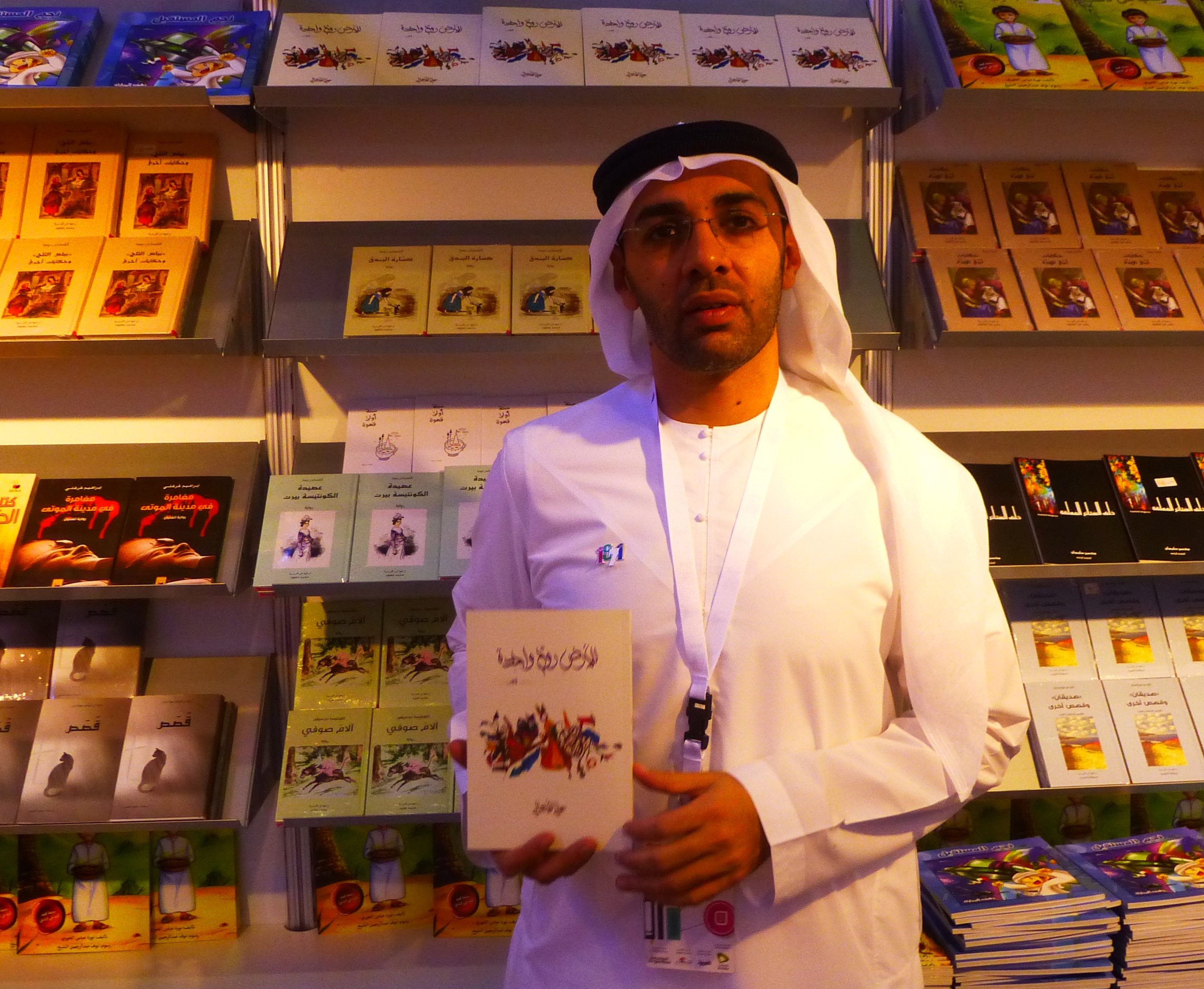
Ali Al Shaali 2First I met with Ali Al Shaali. Al Shaali studied engineering and is also a publisher himself, mostly of books for young adults. We spoke about poetry’s place in the Arabic world in general, and in the Emirates specifically. While explaining that poetry is very deeply rooted in the culture “we decorate our homes with it,” he said, he also noted that novels, TV and other media have replaced poetry for a lot of people.  “This has been the case for poetry since the dawn of history, and I’m not worried about it.”  However, he pointed out that poetry has a particularly strong supporter in the country—the ruler of Dubai and vice president of the UAE is a poet and has published books (I bought one while at the fair).

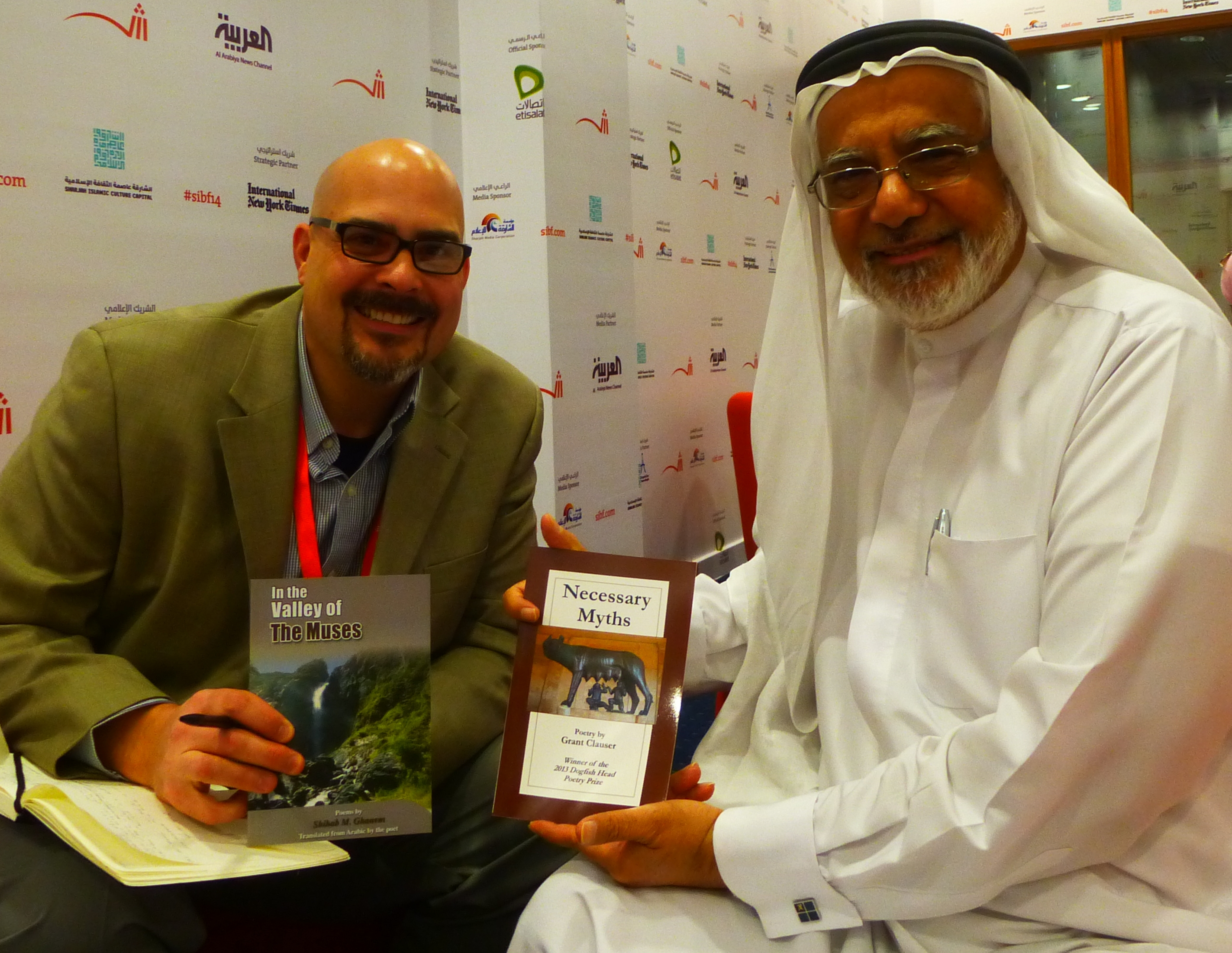
Me andGhanem 2Next I was lucky enough to meet with Shihab Ghanem, who happens to also be an engineer with degrees from the UK. Ghanem is a well-known poet in the UAE, and knows most of the other significant poets. In addition to his own poems, he’s translated several English language poets (Frost and Auden are two he mentioned to me) into Arabic. He’s also a key person in an annual poetry festival held in Dubai called The Poetic Heart.

My third poet/engineer of the day was Talal Salim. That pattern is actually pretty common. In the UAE, and in the rest of the Arab world, the path to being a writer doesn’t involve creative writing classes and MFAs. That’s mostly an American phenomenon. People come to poetry writing more organically here. Sometimes through university study of Arabic literature, but mostly by just its infusion in life. All of the writers I spoke to that week became hooked on poetry as school children, and continued to immerse themselves in it alongside their other careers and studies. Why don’t we have more poet-engineers in the US?

* * *

Sheikha Al-MutairiThe next day I had two women Emirati poets on my list. Back to the book fair I went. The first was Sheikha Al-Mutairi (photo on the right). Unlike the previous day’s interviewees, Al-Mutairi specialized in Arabic literature in college.

Next was a meeting with Salha Ghabish, who in addition to being a poet, has been a magazine editor, has published plays, a novel and done radio and TV. Ghabish’s English was a little rusty, so Noura Al Noman, an Arabic sci-fi novelist, helped with translation.

These interviews, in case you’re wondering, are all for an article that will be published later in a US poetry magazine. I’m not including details from the interviews here, because I want to save them for the article.

The next day, Thursday, was my last full day in Sharjah, and a free day. I spent the afternoon visiting museums, walking around the city and being a tourist. In the evening, Hamza Qenawy, a journalist for the arts and culture magazine Dubai Al Thakafiya, met me in the hotel lobby for an interview about my own poetry. Unfortunately for me, the magazine is published only in Arabic, so I won’t be able to read the piece when it comes out.P1020582

In addition to the local writers already mentioned, the book fair introduced me to other guest writers from around the world. Altogether, it was a pretty amazing week.

I’m very grateful to the Sharjah Book Fair for inviting and hosting me for this event, and for the time and attention the writers I met there granted me.


Twitter with me @uniambic

Sharjah Book Fair Day 1: Arrival, Form Panel, Dinner

Form poetry panel group 1This week I’m particularly thrilled to be a guest author of the Sharjah International Book Fair in the United Arab Emirates. Book fairs are a big attraction in the UAE, and the annual event in Sharjah is the biggest of them. Throughout the week I’ll post updates on my experiences here.

Day one started with my arrival at the Dubai airport early in the morning after 13 or so hours of flying (with very little sleep, though I did watch about 8 hours of season 2 of Vikings). When I finally arrived at the hotel (and found a welcome package with dates and flowers waiting for me) I went right to bed.

My first and only Book Fair event of the day was an evening panel discussion on the relationship of form and content in poetry. I shared the panel with Gaza-born poet Na’ima Hasan  and Yousef Abolouz, winner of the Arab Literary Award from the Jordan Writers’ Union. The session was moderated by poet Hamza Qannawi.

I’m afraid to admit, that even with a translator speaking the English words into my wireless earphones, I had difficulty following the other presentations. A big problem is that literary translation can’t be done on the fly, so at one point the translator simply stopped trying. In my own presentation, I discussed the approach to form in two different ways. The first was about form in the classical sense of the word (meter, lineation, stanza structure) and how making those structural choice early in the poem is an important aid to the poet during composition because it takes some of the decision-making element out of the process and can influence, or even force, language choice.

The other kind of form I referred to is more of what I call the purpose-built poem—from as function. Poems that are purpose built to perform a specific function (odes, elegies, letter poems, praise poems…) also aid the writer by restricting choices. Those kinds of forms have built-in goals (though they can be vague goals), audiences, and voices, which all contribute to the content/meaning layer of the poems.

Based on the questions from the audience, and the conversations I had with listeners afterword, I think the talk went over fairly well. I hope jetlag didn’t make me incoherent.

After the panel I went out to dinner with my old college friends Farid and Omer and the writer Saba Imtiaz at the best Thai restaurant in the UAE.

There will be more to report on tomorrow as I plan to spend more time at the book fair and hope to do some interviews with poets I meet.


Writing Process Blog Tour

I need to thank Christine Brandel for inviting me to this writing process blog tour. Please check out her excellent site CLBwrites and see what she’s up to.

Now, onto the questions

What are you working on?

I recently finished up a new poetry manuscript and am starting to send that out to book contests and trying not to think about all the $25 reading fees. A few weeks ago I started a sort-of series of poems that’s sort of a metaphysical bestiary. I also hope to spend time on a long-term project with fishing illustrator Jason Borger. When it’s done, Lucia Press will produce a fine art book of Borger’s prints and my poems. His beautiful fish pictures are done, but I’m not even halfway through writing the poems to compliment the images. I’ve also been collecting and studying odes, classic and new, for a 2-day class I’m teaching in November at Musehouse (you can still sign up here). Some of my own odes will be appearing soon in Gargoyle and Superstition Review.

Also, I’m pretty excited about a trip coming up soon to the Sharjah International Book Fair in the United Arab Emirates. I’ll be on a poetry panel or two, do some readings and browse around meeting writers from all over the world.

How does your work differ from others in the genre?

On the genre level, it probably doesn’t differ a whole lot. I write poems that look like poems and can’t really get confused with clay pots or oriental rugs. However, I hope my poems distinguish themselves in voice and attitude. A reviewer not too long ago called my poetry “old fashioned and audacious,” and I like that.

Why do you write what you do?

I was initially attracted to poetry in 6th or 7th grade when I memorized The Raven. I like the rhythms, images and mystery of it. Those are characteristics I’m still drawn to, and features that I think poetry does best. Also, I have a very short attention span and can’t write long-form creatively.

How does your writing process work?

Usually I start with an image, word or phrase I like. Sometimes that phrase is in the form of a title. I keep a file of lines and titles that occur to me, and a couple of times a week I’ll go to that file and pick out something to work with. Then I just let each line tell me what to put in the next one, so hopefully the poem has a natural, self-generative feel to it. I also tinker with my new poems a lot in the first few days, and if it doesn’t keep my attention longer than that, I’ll probably forget about it. I never save separate drafts; I just save over the prior one, not really caring if I lose something in the process.

For the past year and a half I’ve been doing a lot of what you might call project poetry—poems who’s themes or situations were all planned out in advance. That’s not something I’d ever done before, but I like the results so far. We’ll see if the book gets published.

While I don’t like to use prompts (I assign them in workshops though), I do get a lot of ideas from reading other poems. I especially like response poems in which I write a response to some other poem. I also just plain steal small ideas (and credit the original of course). In fact, once I wrote a poem about finding some other poet’s line in my poem. I’m sure it was an accident.

Check out Christine Brandel’s Writing Process post, click here.

Twitter with me @uniambic