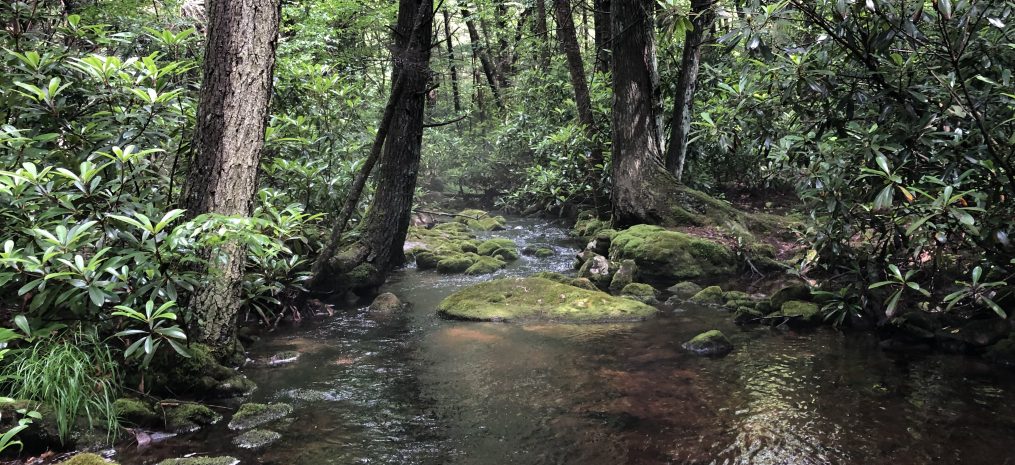
 I was happy to appear this week on David Bauman’s poetry podcast In Three Poems. I love the format which focuses on (as the name implies) three poems. One of mine chosen and read by Dave, one of mine read by me, and one I select by another poet–Tom Hennen’s “From a Country Overlooked.” We talk about birding (Dave’s an expert, I’m a hack), hiking, the silence of pine forests, and what all that has to do with poetry and my new book Temporary Shelters. You can listen to it at this link or find it on Spotify or Apple.
Uncategorized
Book Interview in Which I Explain the Connection to Survivor Man
Here’s a recent interview I did with the writer Curtis Smith for the JMWW literary site. In it we cover a lot of topics from my new book, Temporary Shelters, including using nature as a metaphor, the pandemic, structure, and how the series of How-To poems (including this one) are connected to binge-watching the show Survivor Man.
Another New Poetry Video
New Poetry Video and Book Update
I’m very happy to share this new video from my upcoming book, Temporary Shelters. It was produced by Barebones Filmmakers (who happen to be my daughter and her boyfriend–both extremely talented). We did the filming earlier this year in various locations in Pennsylvania’s Poconos.
We’ll have two more videos to release probably in September when the book is officially available.
On that note, I’m also happy to share that Temporary Shelters can now be pre-ordered from Cornerstone Press (at a 20% discount). Use the scan code on the image below (or this link if that’s easier).

If you’re a reviewer or work at a journal and are interested in reviewing the book, please let me know.
2024 Update and stuff
Well, it’s been a while. I hope your year has been free of major trouble. Here’s a sneak peek of the likely cover of my next book, coming out in 2025 from Cornerstone Press.

In the meantime, if you’re looking for something good to read, I highly recommend a new anthology, The Literary Field Guide to Northern Appalachia (edited by Todd and Noah Davis and and Carolyn Mahan). it pairs descriptions, habitat and lifestyle notes on key species in the region with poems about those species. Yes, I’m included (my entry is the the mayapple). Among the other poets included are David Baker, Kasey Jueds, Chase Twichell, Lee Upton, Marjorie Maddox, K.A. Hays, Michael Garrigan, Jerry Wemple, Chard deNiord, and many more.
In addition to my Rosemont poetry classes, I was happy to teach a couple of guest workshops for the online poetry journal OneArt (edited by Mark Danowsky). Those were fun, so I’ll probably do another next year.
I have a few more poems included in the Poems section of this site. I’ll continue to include more as they become available online.
Finally, like many others, I’ve left twitter for Bluesky. Find me there @grantclauser.bsky.social
that’s it.
gc
New Book Forthcoming
My sixth poetry collection, Temporary Shelters, will be published by Cornerstone Press of the University of Wisconsin | Steven’s Point. It’ll be a year or so until it comes out. I’ll leave updates here as it gets closer.
I also have work forthcoming in the anthology, The Literary Field Guide to Northern Appalachia, published by the University of Georgia Press, also some literary journals including Whale Road Review, Bear Review, and Cimarron Review.
Some News
Verse Daily selected my poem Blessings of a Dog as the winner of its 2023 Verse Daily Poem Prize. The poem was first published by UCity Review. You can read it here.
March 2023 Update
Nothing to report. Check back next year.
2022 Update
It’s winter, nights are in the low teens, and the ground out here is covered with snow. I’m still hiking in the local woods most weekends. My class at Rosemont college is off to a good start–brilliant and insightful students. My monthly local workshop is still going strong after more than 10 years. We’re on zoom at the moment, but we all hope to be back in person soon, as soon as it’s safe.
The writing has been going well, and publishing hasn’t been too bad either. My book manuscript has been a finalist about 5 times so far. I’ve had new poems published by Greensboro Review, UCity Review, Cider Press Review, and some others. Later this year I’ve got poems coming out in Sand Hills Review, Kenyon Review, Louisiana Literature, and Verse Daily, with hopefully more to announce soon.
My 2020 book, Muddy Dragon on the Road to Heaven, received a very positive write-up in Broad City Review, which you can read here. If you’re interested in checking out the book, you can find it here.
I’m still on the fence about going to AWP this year. It’s within easy driving distance, so I’ll probably end up going.
follow/contact me on twitter @uniambic
New Book News
While this may be the weirdest and worst poetry month, it opened with a bit of good news for me. My manuscript “Muddy Dragon on the Road to Heaven” won the Codhill Press Poetry Prize. I’m not sure yet when the book will be published, in part because I just learned the news days ago, and the world has more important priorities at the moment. Still, I’m very happy and grateful. This will be my 5th book of poems, and I truly believe it’s also my best. The title comes from a poem first published by Superstition Review.
Here’s the official notice.
 Grant Clauser