Essay on Associative Poetry

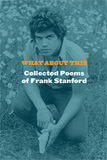
“The discontinuity of the associative mode is an aesthetic response to the frenetic, anti-hierarchical experience of postmodernity, an experience in which the human psyche, assaulted by cable news and News Feeds, Twitter and text messages, suffers from a kind of perpetual attention-deficit disorder, leaping about, as these poems do, from one perception to the next.”  by Christopher Kempf in vol 64 issue 2 of Shenandoah (direct to essay). Here for the full issue.

And inside you’ll find this gem:

“When this balance is lost, when association shades into dissociation and a poem’s allusions seem too anarchistic, the poem becomes self-indulgent, its allusions a kind of private reference or inside joke to which the reader is not privy. Dissociative poetry—a term which characterizes much of our contemporary writing—brands itself as mysterious, postmodern, or playful when in fact such poetry tends more toward obfuscation, clumsily executed and, at worst, devoid of meaning. “Cute and empty” Mehigan calls this poetry; “privileging the arty over art itself,” says Phillips.”

10 Questions for Philip Dacey

Fox Chase Review did this wonderful interview with Poet Philip Dacey.

information's avatarFox Chase Review

philip_dacey_at_SSUPhilip Dacey is the author of twelve books of poetry, most recently Gimme Five (2013), the winner of the Blue Light Press Book Award. The recipient of three Pushcart Prizes, two NEA grants, and a Fulbright
lectureship for his poetry,  he has written entire collections of poems  about Gerard Manley Hopkins, Thomas  Eakins, and New York City. His work has appeared in the Hudson Review, Partisan Review, Poetry, Georgia Review, Southern Review, Esquire, Paris Review, The Nation,
and The American Scholar.  In 2012 he moved from Manhattan’s Upper
West Side to Minneapolis. To learn more about Philip Dacey please visit http://www.philipdacey.com/bio.html

Interview by:  g emil reutter

p1

GER:There has been much debate about the relevance of poetry and poets in recent years. Your career spans decades. Has this been a consistent presence on the poetry scene or a new argument?

PD: I think it’s inevitable that the question is a perennial one since
poetry is conspicuously both a necessary…

View original post 1,984 more words

New Year’s Day Poem

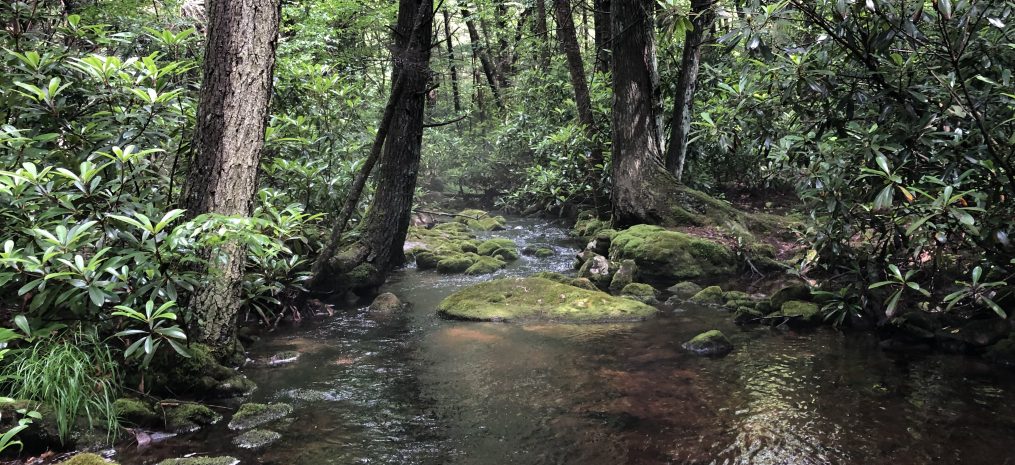
I wrote this on New Year’s Day 2013, I think. The day before I’d spent a few hours hiking around Peace Valley Lake in Bucks County, so that’s where some of the imagery began.

New Year’s Day

The woods smell like good dogs

in the rain, walnuts and acorns cracked

and crunching under boots, the kind

of light that comes like notes

in music, rests where it needs,

holding onto bare bushes or

the cracks in fallen trees.

It’s not the rot and rhythm

of woods that’s right,

the lie of snow against water,

a shifted step from stone to stone

and the life he thinks he lives.

The trail is wide and flat

with rocks he names for dogs

he knew, dark hackles raised to the light.