“Anyone who averts his eyes from the hopeless lives many of our fellow citizens lead and tells himself and others that these men and women only have themselves to blame, is either a fool or a soulless bastard.”
Read Simic’s entire article here.
“Anyone who averts his eyes from the hopeless lives many of our fellow citizens lead and tells himself and others that these men and women only have themselves to blame, is either a fool or a soulless bastard.”
Read Simic’s entire article here.
Over at the Potomac Review blog there’s a great post about the etiquette for Q & A sessions following poetry readings. I usually like Q & A sessions better than the open reading sessions following a reading, if the questions are good. Sometimes they’re not, and this post explains a few ways they can go badly.
To that list of don’ts I’d add one more: don’t use your question as a way to show off how much you know (or think you know) about the poet or poetry. Ask a question. Don’t make a speech. Read the Potomac Review post here.
And here are some more of my own thoughts on poetry readings.
What I hate about National Poetry Month is it makes poetry, and poets, out to be something that needs help, resuscitation, like it’s some kind of save-the-homeless-cats cause.
Thanks to Books Inq.
Bernstein on National Poetry Month
I’ve had Plumly’s “Boy on the Step” on my bookshelf since about 1990, but it had been years since I gave it much consideration. My own interests and aesthetic tendency’s have changed a lot since then, so I’ve been recently going back to books I’d abandoned long ago. This book has been one of the more rewarding re-discoveries for me.
Consider this last few lines from Fountain Park:
” all kinds of things
pass witness and are true about this last
light of day coming onto winter,
the trees almost transparent in the dark,
the high grass green as lawns in the hereafter.”
And here’s a more recent one published in the New Yorker last summer:
Mine, I know, started at a distance
five hundred and twenty light-years away
and fell as stardust into my sleeping mouth,
Continue the poem here
And here’s a video of Plumly reading Infidelity, one of the most startling poems in the book.
Now that I’ve gone back to this book, I’ll have to check out his newer works.
I assume that Anis Shivani was just trying to stir up trouble by his HuffPo post “What is the State of American Poetry.” In it, he questions if poetry in the US has reached a dead end. To answer that daft question he rounded up a handful of reasonably prominent poets and asked for their opinion. Shivani’s post is a form of link bait as he knows other bloggers will not be able to resist throwing their gauntlets into the ring. So maybe he’s succeeded with me, if only because I think this argument will lead to predictable and boring results. One side will argue that poetry went stagnant after whatever generation they align themselves with, while the other side will claim this is be best time ever for poetry. Yup. Heard this before.
Here’s a list of the poets who were invited to the fray: Campbell McGrath, Kevin Prufer, Akilah Oliver, Elaine Equi, Chad Prevost, Cathryn Hankla, Martha Rhodes, Sidney Wade, Ben Lerner, Steve Healey, Alfred Corn, Cynthia Cruz, Julie Carr, Wayne Miller, Anna Rabinowitz, Maxine Chernoff, Claudia Keelan, Rebecca Seiferle, Hadara Bar-Nadav, Shelley Puhak, Raymond McDaniel, Jane Satterfield, Becca Klaver, and Catherine Wagner.
The arguments are being strung out in a series of posts. First up was Claton Eshleman, who seems to think most poets under 60 are boring without offering any evidence to back up his derision. He wants would-be poets to pack up and head abroad and take up translating or criticism.
Next, Annie Finch writes that poetry is at a dead end because modernism pulled it so far away from traditional form and craft that, well, traditional form and craft is seen as a fringe element. OK. Or maybe she’s just saying she doesn’t like a lot of contemporary poetry. Well neither do I (which I’ll go into in more detail in my review of The Best American Poetry 2010 later this week). But that doesn’t mean poetry is at a dead end. It just means she’s fed up with some of the trends. Also, she makes a big plug for her own writing program.
Here’s a bit of her take on the scene:
It worries me that so little published mainstream poetry is intended to be heard by its readers. As a result, people who encounter a poem on the page tend to think it exists on the page–they don’t hear its patterns resonating aloud inside them. Since repeating language patterns are the core distinguishing feature that demarcates poetry as a genre from any other form of language, there’s a lot at stake.
Finally, Ron Silliman, in recognizing that a genere that claims tens of thousands of active practitioners can’t be dead, asks what I think are more important questions. One being, if everyone and his mother is a poet, than how do you measure success—or how do you distinguish yourself from the rest?
His advice to young poets:
You need to both understand the full field & history of writing and to recognize that we are in the very first moments of whatever the next age in history will be, and that the poetry of the future cannot simply be the past dragged on by habit.
Good advice. And he didn’t mention the School of Quietude even once.
The last poet included in Shivani’s survey is Daniella Pafunda, who overall seems to favor the state of American poetry except for the overabundance of millipedes and the lack of more non white, straight, males in the mix. Depends on where you look I think, but if she’s referring to the top tiers of popular academy po-biz, then yes, she’s got a good point.
Anyway, I’m a bit sick of this question, especially when the question seems to really miss the point. Poetry isn’t a career path. Poetry isn’t a competitive sport. Poetry matters simply because it does. That’s about it. Nothing more.
I was watching the show Hoarders last night and one of the subjects described a feeling of pain and bursting if she didn’t rescue every bit of discarded crap she picked up at yard sales and trash cans. She said she couldn’t stop herself from picking things up and giving them a home. I know that feeling, and it’s not because I’m a pack rat. Anyone who takes their poetry writing seriously knows that aside from some rare, brief and fleeting chances at recognition, cash or career, poetry is something you do for yourself because you’re happier when you’re doing it.
Do I want readers? Hell yes, but getting them is really just a matter of effort (I got you to read this). There are open readings happening every night of the year. Journals, both print and magical, for nearly every sort of poet. And if that fails, I’ve got family that I can abuse with my poems. But that still misses the point. Like fishing or camping—poetry is a kind of work we do because we like the experience. We like what we find when we dig there or we feel badly about ourselves if we ignore the urge too long.
Update: I know a lot of people are reading this, so please add your comments. Am I justified at being annoyed by the nature of Shivani’s questions or not? Did poetry tank 20, 40, 100 … years ago? Is the the web a trash heap of poetry or a Trader Joe’s of delight?

Last week (or maybe it was longer than that) I posted a review of Rafey Habib’s new book of poems, Shades of Islam. I followed up with him later and convinced him to answer a few questions about his work and other things:
You’ve been writing and translating poetry and writing about literary theory for years, but until now never published your own poetry. How has the process of assembling a book of your poems been different than what you’d done earlier?
It has been an altogether more pleasant process; for one thing, you don’t have to do any research (at least, not of an academic nature); and I feel that I’m attempting to speak in my own voice rather than one borrowed from academia and which is intrinsically adjectival on the work of others. And I feel that this book (of poetry) does not require a specialist audience.
Many of your political poems can be categorized into two groups: those aimed at Muslims who perform injustices (To a Suicide Bomber, Poem for Neda) and those aimed at explaining Muslims to Western readers (The World Does Not Hate America, Home). What reader are you predominantly trying to reach? And what’s the message?
I am trying to address both non-Muslims and Muslims; I want the former to see the beauty, compassion and pathos that inheres in Islam; I want the latter to see themselves in the light of their larger responsibilities in the modern world (such as acquiring and disseminating an accurate knowledge of their religion).
In the poems that deal specifically with the poet’s relationship to religion, themes of otherness, unworthiness and doubt are common. Are those traditional themes in Islamic literature or are they more connected to your own sense of cultural identity (an Indian Muslim, educated in England and living in the United States)?
They are certainly inherent in my own somewhat torn cultural identity as a Muslim, born in India, raised in England, who migrated to the U.S. But these themes of religious struggle also inform writers in Islamic traditions, such as the Medieval Arab poet al-Ma’ari, the thinker al-Ghazzali and the great C20 Pakistani poet Sir Muhammad Iqbal.
Many of the religious poems don’t make specific reference to things readers would easily recognize as Islamic. Is that intentional, and does it suggest commonality among the major religions.
Yes: our religious dilemmas are often the same; and Muslims experience the same emotions, passions and dilemmas as everyone else.
Your two Tsunami poems are written in a more narrative style with more dependence on images than anything else in the book. Why is that? Can you talk more about the experiences the poems are based on?
I stayed with my family in Malaysia for a year; so we had the opportunity to visit a fishing village in Penang that had been struck by the tsunami. The sheer scale of destruction of that event haunted me for a long time, with its implications for the perennial philosophical questions of God’s justice etc. I was appalled by the facile “religious” explanations offered. It seems to me that it is precisely these unintelligble phenomena that the poet must investigate.
Name a few poets, from any tradition, your draw inspiration from? What do you admire in them?
Shelley, of course: his sheer imaginative and verbal genius; I admire poets who are capable of addressing complex philosophical issues, such as Rumi, Hafez, Milton, Donne and Iqbal.
Rafey Habib’s reputation in literature is built more in criticism and translations because, until now, he’s been hoarding his own poems to himself. The closest we’ve been able to get to the poetry of Habib is his translations of N.M Rashed, The Dissident Voice. Now in Shades of Islam, he is finally offering up a look at his own work.
First off, I should disclose that Habib was a teacher of mine 20 years ago. I took his Literary Criticism and Non-western Literature classes at Bloomsburg University (he now teaches at Rutgers University). I also credit him (or blame him) for encouraging my own writing back in the day. So while I know Habib as a teacher and friend, it’s a pleasure to get to know him better through these poems.
It would also be disingenuous of me not to comment on the timeliness of this release. As I was reading this book, the furor over Park51 (the so-called “Ground Zero Mosque”) was (still is) raging. Right-wing news commentators and politicos were scratching lines in the dust and raising the pitch of Islamophobia while I sat in my backyard reading this book. People who a year ago had never heard the word Sharia, knew what an imam was or what actually happened at Cordoba, were suddenly posturing themselves as experts while calling their bigotry patriotism.
Into this fray drops Habib’s book, a seemingly simple book of mostly lyric poems, many of them devotional, some of the political and all of them irenical. One of the intentions of this book is clearly to present to the Western world a more accurate portrayal of the modern Muslim-American culture than can be gleaned from cable news. It does that, but it also portrays an individual Muslim, one with a multi-layered voice, full of conflict, torn between cultures, allegiances, loyalties and loves. There is great grief, longing, passion and hope in these poems, but no rhetoric or cultural clichés. Unfortunately, the people who most need to read these poems are not likely the hands they’ll fall into.
The opening poem, “Islamic Hymn”, is a straight-forward devotional poem, though with suggestions at separateness the poet can’t overcome, something that is emphasized by the grandiose nature of the language.
The pavilions of Night wear Your perfect Form;
From East and West Your lanterns rise:
Light upon light
Well, of course when put that way God is unattainable. He goes on to say, in another poem:
Many have fainted, hearing aloud these sounds.
Yet he wants to faint too. There’s a lot of searching, struggling with conflict in the religious poems. But what about the speaker’s relationship with God causes so much conflict? It’s not until the poem titled “Prayer” in the book’s second section, that we get a clearer sense of what the speaker’s struggles are all about. Finally, he tells us, by way of asking God:
but please focus on me,
Let the universe, with all its laws
And universal order, somewhow, favor
Me. This is our curse, the rising thought
From below, that will not rise
The biggest struggle then, is not a struggle with God, but a struggle with himself—between selfishness and selfless devotion. It’s fitting then that the sections that follow deal with love (of wife, children, parents) and politics.
In Habib’s poems you won’t find much in the way of contemporary American poetry convention. With a few exceptions, these poems do not rely on the tightly wrapped images, stacked similes or ponderously minute anecdotes that populate the work of today’s mainstream poets writing in English. In fact, Habib’s work is more in line with modern Urdo writers like Faiz Ahamad Faiz or N.M. Rashed. The restraint in the poems, a talent considering the magnitude of the subject matter, seems practiced, and its root is even hinted at in the poem Repression:
I am weighted down
Under centuries of
Prohibition, religion,
Repression; I abide by
The laws, I lower my gaze,
He does veer off this triack a few times, most notably, and successfully, in my two favorite poems in the book: “Tsunami I” and “Tsunami II.” These recount the speaker’s experiences watching a tsunami devastate a landscape. From the vantage “from high stories of hotels,” he manages to escape harm, yet internalizes the might and malevolence of the storm: “Now I know,/All of my life I have been hearing you … One day, I know, you will come for me,/ Tsunami.”
In “Tsunami II”, an even more intimate poem, absent the grand landscape of destruction, we find the poet at the shack of a storm survivor a month after the fact, feeling humbled by a family who has lost everything, though still willing to offer the poet the last things they have.
Curiously, those two poems come at the end of the section Recitation and Revelations, which is filled with very spiritual poems of doubt and inadequacy. Those are two themes the poet struggles through continuously in this book. Many of the poems reveal a speaker grappling with his own faith. The poems are filled with references to uncertainty and unworthiness—ideas that Christian readers will be familiar with. In fact, in a different context, many of these poems could just as easily be recast as Christian faith (or Jewish for that matter) poems with only a few word changes. This religiously generic nature may be intentional, a way to show similarity between cultures, or if not, it still has that effect.
It’s likely the most important poems in this book, the ones that have the greatest chance of reverberating with a larger audience outside either a Muslim readership or a typical poetry readership, are the political poems. In the section subtitled Political Musings, Habib gets right down the meaty subjects: suicide bombers, Iranian protesters, Palestine and even the building of a Mosque in Voorhees, New Jersey. In these poems the language is stronger, more direct and assaulting:
from “To a Suicide Bomber”
Because of you, I am reviled;
Because of you, your own people suffer;
Because of you,
Oppression speaks louder.
Because of you, my religion reels in shame.
These are poems that are both seeking empathy and action. In his elegy of Neda Agha-Soltan, the young Iranian girl who’s death became a symbol in 2009 when she was shot by the militia during the country’s election, Habib accuses Iran of betraying its people, but he also accuses those
who watch from afar,
In fear, who flirt,
With freedom’s name
Who smile unashamed
As tyrants old or new
Play your card for you.
I’m reminded a bit of the poem “To Those Palestinians Martyred in Foreign” Lands by Faiz Ahmad Faiz:
Sweet earth of Palestine,
wherever I went
carrying the burning scars of your humiliation,
nursing in my heart the longing
to make you proud,
your love, your memories went with me,
the fragrance of your orange groves went with me.
Other poems in this section even more directly address the Muslim/American experience. In “The World Does Not Hate America”, “To the Muslims of the Twenty-First Century” and others, Habib tries to both straighten out misconceptions and offer reconciliations to the future. These observation may be a bit overly simplified, but he makes his point that the two different worlds are not really so different.
Here’s a video of Habib reading “To A Suicide Bomber.”
Buy the book here.
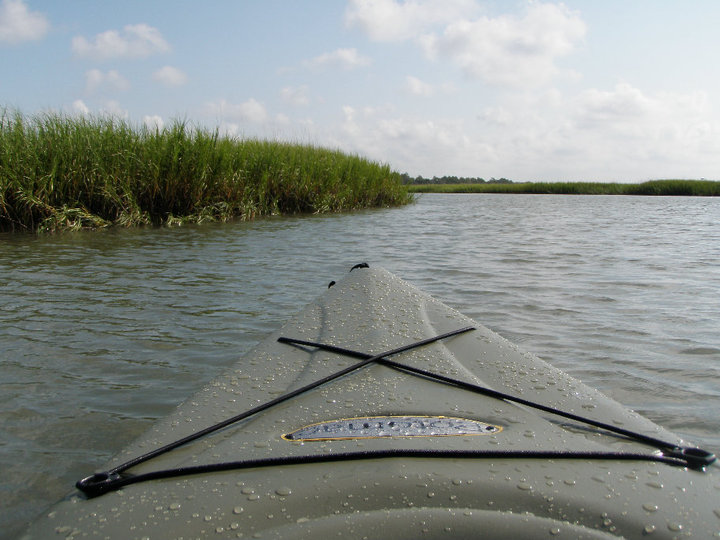
For any readers (both of you) who noticed I was gone, well, I’m back. I spent last week vacationing on the Isle of Palms near Charleson, SC. In between wave jumping, shell collecting, marsh kayaking and shrimp eating, I did manage to read and write some poetry, but neglected to posting anything interesting here. We were only minutes from the Sullivan’s Island home of novelist Mary Alice Monroe, but she ignored our request for a visit–too busy counting turtle eggs I guess.
Because I’m pretty busy catching up, I’ll just leave you with a few lowcountry poety links.
South Carolina Poet Laureate Marjory Wentworth
Poetry Society of South Carolina
University of South Carolina Press
South Carolina Poetry Initiative
One of my former teachers from BG.
This is fun. David Lehman, series editor for The Best American Poetry (which has yet to include me–damnation!) posted a sort of poetry game on his blog. Take a line from an existing poem–it’s more fun if it’s a classic poem–and change one letter in one word. Assemble a bunch of those to make a new poem. It’s just a nerdy poet’s game, something to be done in a pub with other nerdy poet friends, but it’s fun nonetheless. It’s also a good way to pass the time at work when you’re supposed to be, um, working. Out of necessity I altered the rules a bit to allow the addition of one letter if just the changing of one letter doesn’t work. I know, that makes me a cheater. I don’t do crossword puzzles for that reason.
Here’s a go at it (thanks to Milton, Blake, Homer, Pound, Arnold and Wright ):
Sing, oh Heavenly Mouse, that on the secret top,
dost thou know who bade thee
give me fare well, and stain the hound with wine?
There can be but one bordello.
A cry like thine in mine own heart I fear:
I have wasted my lice.

 Grant Clauser