Review: Shades of Islam by Rafey Habib

Rafey Habib’s reputation in literature is built more in criticism and translations because, until now, he’s been hoarding his own poems to himself. The closest we’ve been able to get to the poetry of Habib is his translations of N.M Rashed, The Dissident Voice. Now in Shades of Islam, he is finally offering up a look at his own work.

First off, I should disclose that Habib was a teacher of mine 20 years ago. I took his Literary Criticism and Non-western Literature classes at Bloomsburg University (he now teaches at Rutgers University). I also credit him (or blame him) for encouraging my own writing back in the day. So while I know Habib as a teacher and friend, it’s a pleasure to get to know him better through these poems.

It would also be disingenuous of me not to comment on the timeliness of this release. As I was reading this book, the furor over Park51 (the so-called “Ground Zero Mosque”) was (still is) raging. Right-wing news commentators and politicos were scratching lines in the dust and raising the pitch of Islamophobia while I sat in my backyard reading this book. People who a year ago had never heard the word Sharia, knew what an imam was or what actually happened at Cordoba, were suddenly posturing themselves as experts while calling their bigotry patriotism.

Into this fray drops Habib’s book, a seemingly simple book of mostly lyric poems, many of them devotional, some of the political and all of them irenical. One of the intentions of this book is clearly to present to the Western world a more accurate portrayal of the modern Muslim-American culture than can be gleaned from cable news. It does that, but it also portrays an individual Muslim, one with a multi-layered voice, full of conflict, torn between cultures, allegiances, loyalties and loves. There is great grief, longing, passion and hope in these poems, but no rhetoric or cultural clichés. Unfortunately, the people who most need to read these poems are not likely the hands they’ll fall into.

The opening poem, “Islamic Hymn”, is a straight-forward devotional poem, though with suggestions at separateness the poet can’t overcome, something that is emphasized by the grandiose nature of the language.

The pavilions of Night wear Your perfect Form;

From East and West Your lanterns rise:

Light upon light

Well, of course when put that way God is unattainable. He goes on to say, in another poem:

Many have fainted, hearing aloud these sounds.

Yet he wants to faint too. There’s a lot of searching, struggling with conflict in the religious poems. But what about the speaker’s relationship with God causes so much conflict? It’s not until the poem titled “Prayer” in the book’s second section, that we get a clearer sense of what the speaker’s struggles are all about. Finally, he tells us, by way of asking God:

but please focus on me,

Let the universe, with all its laws

And universal order, somewhow, favor

Me. This is our curse, the rising thought

From below, that will not rise

The biggest struggle then, is not a struggle with God, but a struggle with himself—between selfishness and selfless devotion. It’s fitting then that the sections that follow deal with love (of wife, children, parents) and politics.

In Habib’s poems you won’t find much in the way of contemporary American poetry convention. With a few exceptions, these poems do not rely on the tightly wrapped images, stacked similes or ponderously minute anecdotes that populate the work of today’s mainstream poets writing in English. In fact, Habib’s work is more in line with modern Urdo writers like Faiz Ahamad Faiz or N.M. Rashed. The restraint in the poems, a talent considering the magnitude of the subject matter, seems practiced, and its root is even hinted at in the poem Repression:

I am weighted down

Under centuries of

Prohibition, religion,

Repression; I abide by

The laws, I lower my gaze,

He does veer off this triack a few times, most notably, and successfully, in my two favorite poems in the book: “Tsunami I” and “Tsunami II.” These recount the speaker’s experiences watching a tsunami devastate a landscape. From the vantage “from high stories of hotels,” he manages to escape harm, yet internalizes the might and malevolence of the storm: “Now I know,/All of my life I have been hearing you … One day, I know, you will come for me,/ Tsunami.”

In “Tsunami II”, an even more intimate poem, absent the grand landscape of destruction, we find the poet at the shack of a storm survivor a month after the fact, feeling humbled by a family who has lost everything, though still willing to offer the poet the last things they have.

Curiously, those two poems come at the end of the section Recitation and Revelations, which is filled with very spiritual poems of doubt and inadequacy. Those are two themes the poet struggles through continuously in this book. Many of the poems reveal a speaker grappling with his own faith. The poems are filled with references to uncertainty and unworthiness—ideas that Christian readers will be familiar with. In fact, in a different context, many of these poems could just as easily be recast as Christian faith (or Jewish for that matter) poems with only a few word changes. This religiously generic nature may be intentional, a way to show similarity between cultures, or if not, it still has that effect.

It’s likely the most important poems in this book, the ones that have the greatest chance of reverberating with a larger audience outside either a Muslim readership or a typical poetry readership, are the political poems. In the section subtitled Political Musings, Habib gets right down the meaty subjects: suicide bombers, Iranian protesters, Palestine and even the building of a Mosque in Voorhees, New Jersey. In these poems the language is stronger, more direct and assaulting:

from “To a Suicide Bomber”

Because of you, I am reviled;

Because of you, your own people suffer;

Because of you,

Oppression speaks louder.

Because of you, my religion reels in shame.

These are poems that are both seeking empathy and action. In his elegy of Neda Agha-Soltan, the young Iranian girl who’s death became a symbol in 2009 when she was shot by the militia during the country’s election, Habib accuses Iran of betraying its people, but he also accuses those

who watch from afar,

In fear, who flirt,

With freedom’s name

Who smile unashamed

As tyrants old or new

Play your card for you.

I’m reminded a bit of the poem “To Those Palestinians Martyred in Foreign” Lands by Faiz Ahmad Faiz:

Sweet earth of Palestine,

wherever I went

carrying the burning scars of your humiliation,

nursing in my heart the longing

to make you proud,

your love, your memories went with me,

the fragrance of your orange groves went with me.

Other poems in this section even more directly address the Muslim/American experience. In “The World Does Not Hate America”, “To the Muslims of the Twenty-First Century” and others, Habib tries to both straighten out misconceptions and offer reconciliations to the future. These observation may be a bit overly simplified, but he makes his point that the two different worlds are not really so different.

Here’s a video of Habib reading “To A Suicide Bomber.”

Buy the book here.

Bookmark and Share

Back from the Lowcountry

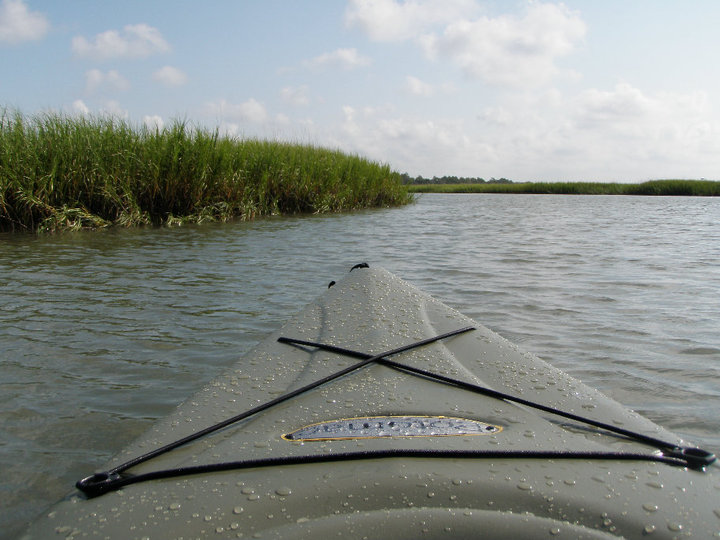
For any readers (both of you) who noticed I was gone, well, I’m back.  I spent last week vacationing on the Isle of Palms near Charleson, SC. In between wave jumping, shell collecting, marsh kayaking and shrimp eating, I did manage to read and write some poetry, but neglected to posting anything interesting here.  We were only minutes from the Sullivan’s Island home of novelist Mary Alice Monroe, but she ignored our request for a visit–too busy counting turtle eggs I guess.

Because I’m pretty busy catching up, I’ll just leave you with a few lowcountry poety  links.

South Carolina Poet Laureate Marjory Wentworth

Poetry Society of South Carolina

University of South Carolina Press

Spoleto

South Carolina Poetry Initiative

David Lehman’s New Poetry Form, The Letter Change

This is fun. David Lehman, series editor for The Best American Poetry (which has yet to include me–damnation!) posted a sort of poetry game on his blog. Take a line from an existing poem–it’s more fun if it’s a classic poem–and change one letter in one word. Assemble a bunch of those to make a new poem. It’s just a nerdy poet’s game, something to be done in a pub with other nerdy poet friends, but it’s fun nonetheless. It’s also a good way to pass the time at work when you’re supposed to be, um, working.  Out of necessity I altered the rules a bit to allow the addition of one letter if just the changing of one letter doesn’t work. I know, that makes me a cheater. I don’t do crossword puzzles for that reason.

Here’s a go at it (thanks to Milton, Blake, Homer, Pound, Arnold and Wright ):

Sing, oh Heavenly Mouse, that on the secret top,

dost thou know who bade thee

give me fare well, and stain the hound with wine?

There can be but one bordello.

A cry like thine in mine own heart I fear:

I have wasted my lice.

Where Do You Write?

I have a very dull fiberboard desk I bought at Wal-Mart maybe eight years ago. Surrounding my laptop are piles of paper, post-notes, stray computer cables, a little  jade tree, two little buddhas, books, pens, a polished stone skull and other scraps. I painted the office a pleasing green tea color (looks like green tea ice cream). I put book shelves up last summer, but there are more books scattered on the floor. Next to the desk is the small table I use to tie flies. Under that are crates of fur, feathers, hooks and thread. I can see the trees and sunrises out my window, and if I crane my neck around I can see my little goldfish pond and the veggie garden. Why am I telling you this? Because in the Ploughshares blog Aimee Nezhukumatathil  writes about her favorite writing spot and asked all her friends to share theirs. My office isn’t nearly as cool as some she reveals, though it’s bit more functional than others. Mostly I need more shelves and should make more of an effort to pick up my socks. I’d post a picture but I can’t find any of my cameras.

I’m also jealous of Ann Townsend’s dock where she goes when the desk and computer aren’t working out

When I had a job that required me to take a 50 minute train ride twice a day I would often get poems started while commuting with my laptop. Now it’s mostly at night, here, at my desk.  So, where do you write?  At a desk? In the kitchen? Does it matter?

Update: the original post is more than a year old, and my writing and work situation has changed a bit. So that.

Elizabeth McLagan: Bellingham Review Award

In researching some more poetry contests to throw money away at I stumbled across Elizabeth McLagan’s poem All Alien Spirits Rest the Spirit, the winner of the 2009 49th Parallel Poetry Award. Listen to this:

“There are rocks that have forgotten the body:
orphaned, smoothed by their journey, tossed up

at random and left to dry in the sun.”

Wow. Liked it so much I searched for more and found Goodwill on Verse Daily.

”   … even now I am looking

for something among the sorrowful
dresses and empty sheets, all the stuff
pouring out its plain sadness
until I can’t want for anything more.   ”

Frostwriting: Swedish Haiku

I came across the Website Frostwriting the other day.  It’s an English-language online litzine from Sweden (which explains the frost). There’s lots to like here, such as Carolyn Scarbrough’s Monday Morning. I love the image of a stream of water braided with light.

One thing I notice about much on this site is the casual, sarcastic or indifferent attitude toward death. Read The Shirt for a good example of what I’m referring too. Is that a Swedish thing (but many of the contributors are American)? My mother’s side of the family is Swedish (the Tholans and Ostergrens). I visited their native land of Malmo several years ago. Good herring.

If you visit Frostwriting be sure to check out all the Swedish haiku on the site. Here’s my favorite by Daniel Gahnertz

digging up my cat
to bury her
deeper…

Apparently there’s a Swedish Haiku Society. Cool.

Also I discovered that there’s a Swedish novelist named Klas Ostergren. Maybe we’re related.


Bookmark and Share

Allen Hoey, “wonderer steps softly within”

Last week I went to a memorial reading for poet, novelist and teacher Allen Hoey. Allen died of a heart attack the week before, and this reading, at a library in Newtown, was in fact supposed to be his reading to promote his new selected poems Stricter Means.

Allen was a teacher for many years at Bucks County Community College, which is where I met him in the early 90s when I was an adjunct there teaching composition and intro to lit. Between classes I’d sometimes sit with him in his office, talking about poems, looking over books, listening to recordings (I particularly remember getting excited at his recording of Richard Hugo—for some reason it’s hard to find fellow Hugo fans these days).

Later he contributed to a literary journal I was involved in and read with me at one of the journal’s launch readings. Long after I left teaching Allen and I stayed in touch, mostly via email and later, Facebook, to which we were both addicted.

The event, held in an old, small-town library filled as much with regional historical artifacts as books, was overflowing with celebrants (mourners is not the right word here). Christopher Bursk, Allen’s colleague from BCCC organized and ran the event in which friends and associates read selections of Allen’s poems to a somber but appreciative crowd. I read a poem Allen wrote about an experience with his son when he was a child, an undertaking made more difficult because his now-adult son was sitting 10 feet in front of me.

To say it was a sad event is hardly accurate. Poignant comes closer, but not quite right either. The gathered understood as one the tragedy of the loss, yet I think Allen would recognize that every loss is a tragedy. This one was made more significant by the intensity of his investment into other people and into his work and therefore, into some future.

In Allen’s poem What Persists, a poem about the death of a student, he suggests that what continues after we’ve passed is not our memory so much but what we’ve invested of ourselves in others, almost (though he doesn’t quite say that) as if we intentionally diminish ourselves by our contributions to others. I’m guessing that it’s both a voluntary and involuntary investment, though poets (and other artists) work a bit harder at it than most people.

Anyway, the memorial was the most perfect send off for a poet and teacher. The assembled included teachers, poets, students and friends. There were as many smiles as damp eyes in that library, both at the same time as if the two completed a yin and yang symbol. We read his poems to each other, shared his beautiful contributions, talked and then moved into our own separate evenings. All attendees signed a copy of his latest book as a gift to his family, something to help them remember the magnetism of this man and to ensure something persists.

Here’s a translation of a Georg Trakl poem Allen did in a small collection called Transfigured Autumn. The table is readied…

A Winter Evening

When snow falls against the window,

The evening bell tolls long,

For many the table is readied

And the house well-provided.

Many in their wanderings

Come to the door from dark paths.

The tree of graces blooms golden

With the earth’s cool sap.

Wanderer steps softly within;

Pain has petrified the threshold.

Then in pure brilliance gleams

On the table bread and wine.

Bookmark and Share

Forbidden Texts

At a recent gathering of local poets (thanks for the burgers Liz and Liz’s husband) the subject of gardening came up. About half of the small group in attendance were dirt diggers of some sort. Liz participates in a community plot. Cleveland (yes, her name, so cool) admitted to a veggie patch, Joanne recently started a butterfly garden (send pictures please), and I’m the proud curator of 150 square feed of tomatoes, squash, peppers and other leafy things.

Among the talk of zucchinis, someone mentioned a workshop teacher had forbidden any garden poems (poor Wendell Berry). I had an experience in which a workshop teacher threatened us if he found any references to herbs or spices (this teacher actually brought a 10-inch knife to class and once stabbed a student’s poem with it. The student left crying). I know several litzines automatically throw back any poem about poetry or about writing poetry. A friend once suggested that I write about fishing too much. He’s probably correct, but I think about fishing a lot, so I really can’t help it.

Anyway, that got me thinking about forbidden subjects—not taboo subjects, but subjects that readers, teachers, editors don’t want to see. I’m guessing, and this is just a guess, the reason for the prejudice is overuse or over exposure. Gardening poems are so abundant there’s almost a genre unto themselves, much like elegies or poems about ankles (I’m joking about the ankles). The suggestions or potentials in gardens make them so temping for writers. The digging, planting, hoping, harvesting… It’s a cliché bag before you even open it. You know the poet is investing something heavy in the planting of seeds, is hoping or looking for something, placing all his or her bets on its success. Digging in the soil, rich with potential … you see how it works. Same goes for spices and herbs I assume. The poet is adding flavor, spicing things up so to speak. Yes, too easy. And fishing, that’s so god awful clichéd I should be punished (especially the snooty fly fishing poems), but I do it anyway. I do it all. Why? Not because it’s easy (well, sometimes because it’s easy), but because it also works. If some of those themes verge on cliché it’s because there’s a shared understanding in the experience, I hope. And that shared understanding, if done in a new and surprising way, is what triggers that positive pressure point in a reader. If I read a garden poem that allows me to taste that commonality between myself and the reader, but in a unique way (like the first time I tasted mashed potatoes with wasabi sauce—rock and roll!) then that poem works for me. And there’s the challenge. It is sometimes easier for teachers, readers, editors to immediately dismiss those common themes, but there’s a big risk you’ll miss out on the wasabi.

However, I do have a personal grudge against villanelles, and I’m not willing to get over it. I don’t like popcorn much either.

Now I will go write another gardening or fishing poem.

Oh, and you’ll like this.